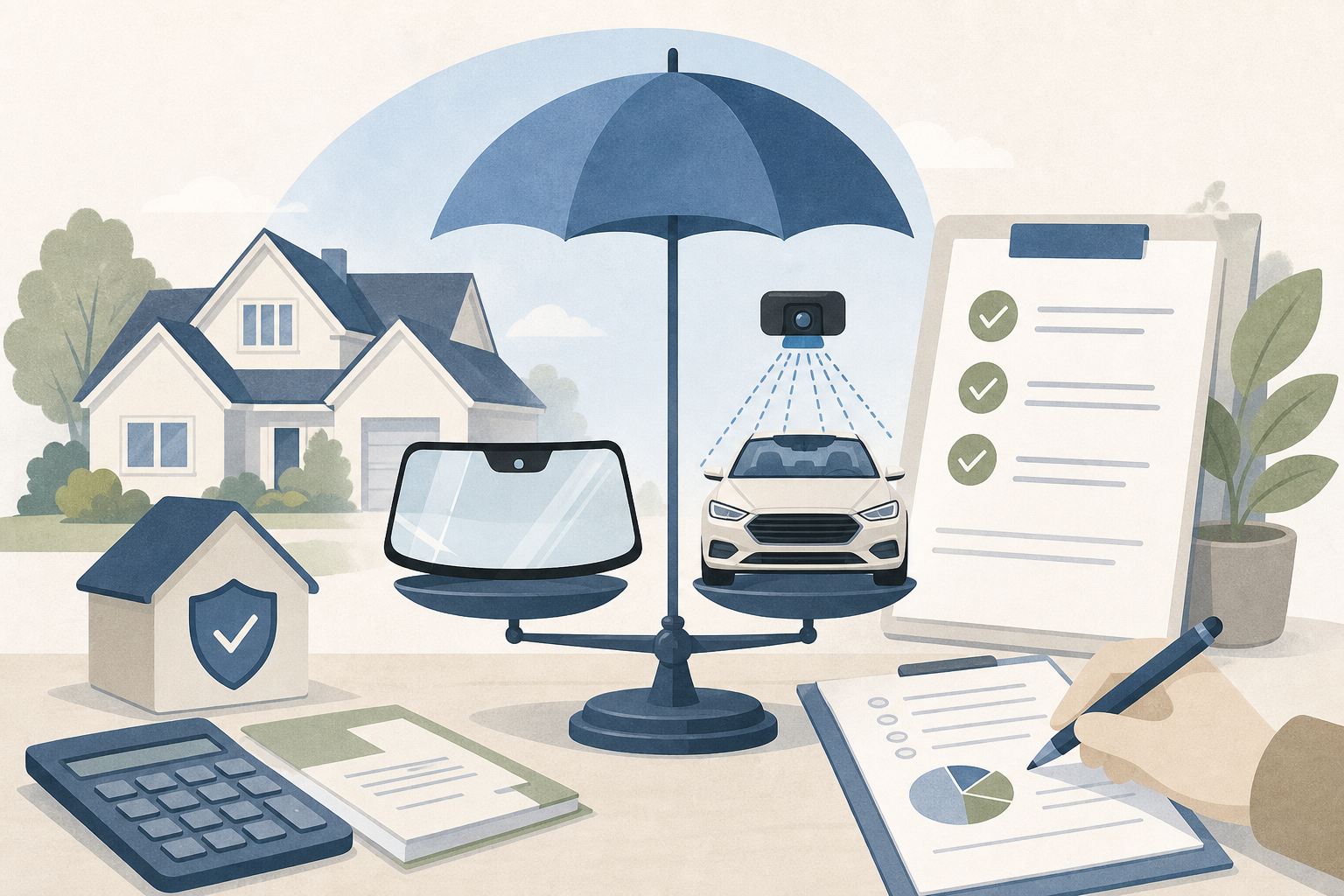
The number you searched for isn't the number that matters
You want a windshield replacement cost calculator because you want one number: what is this going to cost me. Fair. But here's the catch nobody mentions in the search results: the glass price and the price you'll actually pay depend on a second question, which is whether you file a claim or pay cash. Same crack, two completely different bills. This post gives you both halves: what drives the sticker price, and the should-I-file math that decides what you actually owe.
Why the old glass-only number doesn't apply anymore
If you remember windshield replacement costing a few hundred dollars flat, you're remembering a car without a camera bolted behind the rearview mirror. Most cars now built with driver assist features (lane keep, automatic braking, adaptive cruise) have a camera or sensor that looks through the windshield. Replace the glass, and that camera is now aimed at slightly different glass. It has to be recalibrated so it still sees the road the way the car's software expects.
That recalibration is a separate line item from the glass. It's not an upsell. It's not the shop padding the bill. It's a real procedure, sometimes done with the car parked and aimed at a target board, sometimes done on a test drive, and it's the single biggest reason a modern quote looks so much bigger than the number your parents would have expected. We've written about this gap in detail in Why Your Windshield Quote Jumped $2,000: ADAS Calibration Explained and in Same Crack, Two Prices: Why ADAS Calibration Turns a $400 Fix Into a $2,500 Claim, if you want the full breakdown of how calibration gets bundled into a quote.
The takeaway for your search right now: the total cost depends on whether your car needs calibration, and that depends on your make, model, and year, not on a universal windshield price. A calculator that just asks "what car do you drive" and spits out a flat number is guessing. The number that actually matters is the one you get from a real quote, compared against what filing would cost you.
Who wants you to file, and why that matters before you do any math
Here's the part nobody in the chain is going to say out loud. The shop doing the glass work often prefers you file a claim, because insurance claims tend to pay full retail with no haggling over the calibration line item. Your carrier, meanwhile, is not sitting there hoping you pay cash out of generosity. They're happy to process the claim, because a claim on record gives them grounds to raise your premium at renewal, and raising your premium is the whole business model.
Neither of them is lying to you. They're just not the neutral party. That's the gap Should I Claim It exists to fill: https://shouldiclaimit.com is the windshield replacement cost calculator that doesn't stop at the price, it runs the full should-I-file comparison and shows its math.
The three numbers that actually decide the answer
Forget adjectives like "expensive" or "not worth it." Here's the arithmetic you can check yourself.
1. Your deductible versus the job cost
If your glass coverage has a deductible, say your policy requires you to pay the first chunk of any glass claim, then filing only makes sense if the total job cost (glass plus calibration) is bigger than that deductible by enough to matter. If the job cost barely clears your deductible, you're handing the insurance company a claim on your record to save yourself a small difference. That's a bad trade before you even get to the next two numbers.
2. The premium surcharge
Filing a claim can trigger a rate increase that shows up every renewal period, not just once. A surcharge that adds even a modest amount to your premium, repeated across multiple renewal cycles, can add up to more than the windshield job cost outright. This is arithmetic, not a feeling: add up what the surcharge costs you over the renewals you expect to keep the policy, then compare that total to what you'd have paid out of pocket today.
3. The lost claims-free discount
Separately from any surcharge, some carriers give a discount specifically for not having filed a claim. File one small windshield claim and that discount can disappear, sometimes for years. Add that lost discount to the surcharge, and the "just file it" instinct starts to look expensive fast.
Run all three against the job cost, and you've got your answer. That comparison, not a glass price alone, is what a real windshield replacement cost calculator should be doing. It's also the engine behind the calculator at shouldiclaimit.com.
Asking is not filing
If you've been putting off even checking your coverage because you're scared a phone call will "count," stop worrying about that specifically. Asking your carrier a question, getting a quote, or running a calculator is not the same as opening a claim on your record. A claim has to actually be filed to show up on your CLUE report or trigger a surcharge. We cover exactly where that line sits in Does Calling Your Insurance Company About a Windshield Crack Count as a Claim?. Check your numbers first. You can always decide not to file after you know what it costs.
Why this decision matters more right now
It's renewal season for a lot of policies this time of year, and a filed claim doesn't just affect this year's premium. It follows you on your CLUE report for seven years, which means a small windshield claim filed now can shape how your carrier prices you at multiple renewals down the road, not just the next one. If you've got a crack you've been ignoring, this is the stretch of the year to decide before renewal does the deciding for you. More on that timing in Should You File a Windshield Claim Before Your Policy Renews?
Run the real numbers before you call anyone
A glass price by itself can't tell you what to do. The deductible, the surcharge, and the lost discount are what turn a cost number into a decision, and when those three add up to more than the job itself, the answer is pay cash. Plainly, no hedge. Run your numbers through the should-I-file calculator at https://shouldiclaimit.com before you call your carrier.
This post is education, not legal or insurance advice. Rules on glass coverage and claim reporting vary by state and by policy; check your own policy and your state's verified rules before you decide.