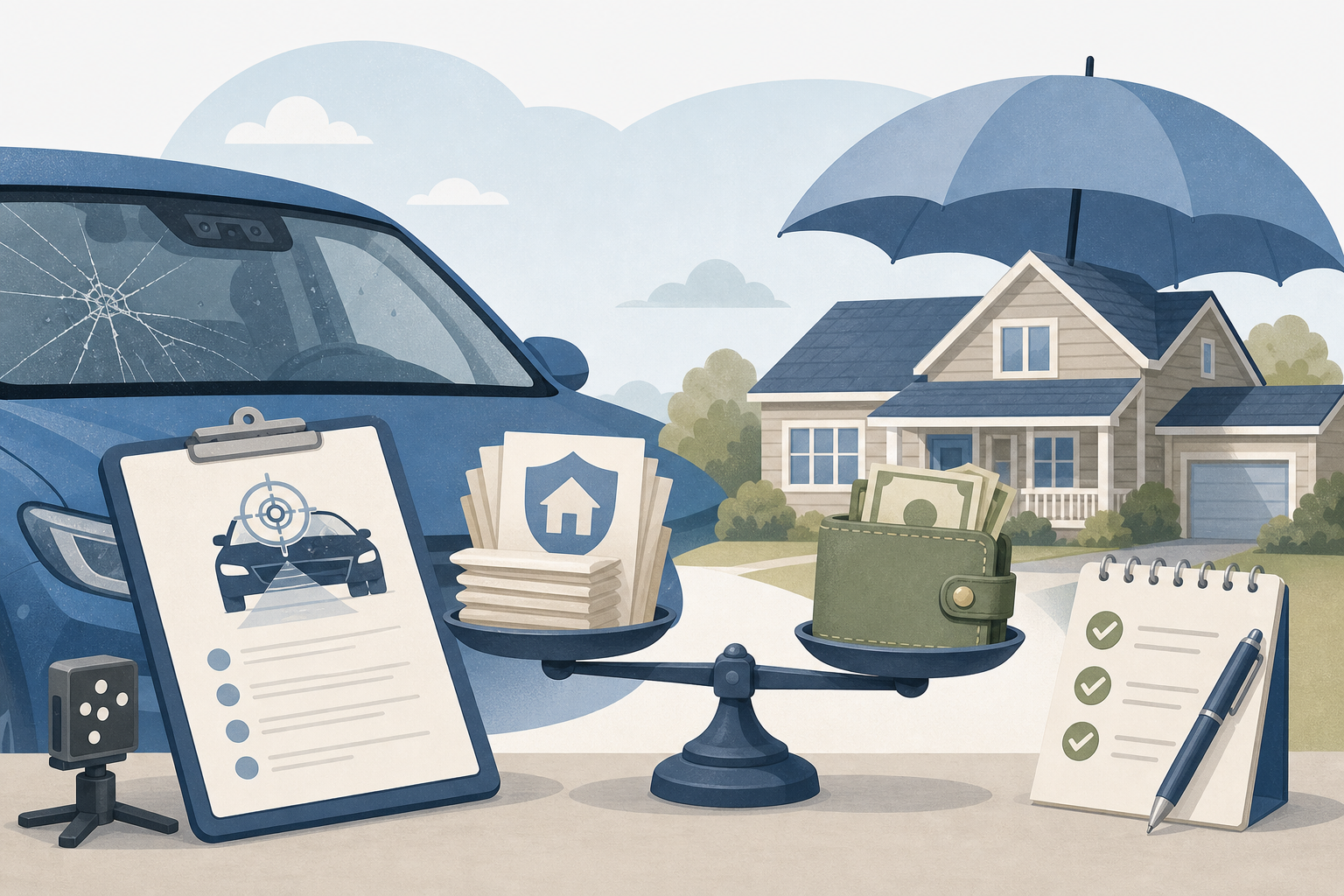
The glass is not the expensive part anymore. On a lot of newer cars, the pricey part is a line you may not see until the invoice: ADAS calibration.
ADAS is the set of driver-help features like lane-keep and auto-braking. Here is the plain version: your car's eyes are glued to the windshield. A camera sits behind the mirror and looks through the glass. New glass means those eyes have to be pointed again. That re-aiming is calibration, and it costs real money.
So if your quote said one thing and the bill said a much bigger thing, you are not bad at reading quotes. The quote just left out the part that does the most damage.
Why calibration shows up after the glass goes in
A shop can quote you for glass and labor. Then the new windshield goes in, the camera gets checked, and calibration lands on the bill as its own charge. Sometimes nobody mentions it up front because the shop is quoting the part it thinks you asked about.
The industry has a lovely phrase for this step: "restoring factory specifications." It sounds like a spa treatment for your car. On paper, it is often a line item you were never told about.
If you want the full breakdown of why the same crack can carry two very different prices, read Same Crack, Two Prices: Why ADAS Calibration Turns a $400 Fix Into a $2,500 Claim.
Who sets the calibration price (and who profits)
Before any math, look at who benefits from each answer.
- The carrier's network shop sets the calibration price on jobs routed through it. It gets paid more when the job is bigger.
- The carrier would rather the job go through its network, where it controls the process. It also gets to record your claim.
- Nobody in that chain stops to ask what a glass-plus-calibration job would cost if you paid cash at an independent shop.
That last point is the whole problem. Every person on the phone has a reason to send you toward filing. None of them is paid to tell you to skip it. We break down that gap in Your Shop Quoted $800. The Carrier's Network Shop Wants $2,500. Here's the Math on Filing Anyway.
The file-or-pay-cash math you can redo yourself
You only need a few numbers. We will use blanks instead of made-up prices, because your car and your policy are yours.
Step 1: Find what insurance would actually pay
First, a quick translation. Your deductible is the part you pay before insurance pays anything.
- Glass cost: ____
- Calibration cost: ____
- Total job = glass + calibration = ____
- Insurance pays = total job minus your deductible = ____
If the total job is smaller than your deductible, insurance pays zero. You are paying either way. Do not file.
Step 2: Add up what filing costs you
Filing a claim can cost money even after the repair is done. Two things to count:
- Premium surcharge. A surcharge is an extra charge added to your insurance price because you filed a claim. Write the yearly amount and how many years it lasts. Surcharge per year x years = ____
- Lost claims-free discount. Many policies give you a discount for going without claims. File, and you can lose it. Discount per year x years = ____
What filing costs you = surcharge total + lost discount total = ____
Your agent or your policy papers can tell you these numbers. Asking is free.
Step 3: Compare the two numbers
Put them side by side.
- Insurance pays: ____
- Filing costs you: ____
If what filing costs you is bigger than what insurance pays, pay cash. That is the verdict. The claim would cost you more than it gives you.
If insurance pays clearly more than filing costs you, filing can make sense. But do the arithmetic first. Most people never see these two numbers next to each other, because nobody in the chain writes them down for you.
Asking is not filing: get the quote first
Here is the step that protects you. Before you call your carrier, call an independent glass shop and ask for a written quote that lists calibration as its own line.
Why in writing, and why as a separate line? Because that is the number that grows. If calibration is listed, you can plug the real total into the math above. If it is missing, ask about it directly.
A quote is a question. A filed claim is a record. You can ask a shop for a price as many times as you want. You cannot un-file a claim. More on that line in Should I File a Windshield Claim? The Math Before You Call Your Carrier.
Why this matters more in fall
Fall is renewal season. If you have been driving around with a summer chip that spread into a crack, this is when the decision gets real.
A filed claim goes on your CLUE report. That is a shared database insurers use to see your claims history. Claims stay on it for 7 years. So a claim filed this fall follows you through several renewals, not just one.
It also lands right before your renewal, which is when people worry most about non-renewal (your insurer deciding not to keep you). A small glass claim filed now is fresh on your record at the exact moment your carrier is deciding what to do with your policy. That is worth knowing before you dial.
Does your state change the answer?
It can. Windshield coverage rules vary from state to state. We do not state those rules in blog posts, because a rule worth relying on deserves a real source.
Instead, check our windshield insurance law pages. Each one is hand-written, cites primary sources, and carries a verified-on date, so you can see when it was last checked.
One more thing: we publish how we make money, in plain English, on our site. Our verdict is not tied to whether you file. That is why the pay-cash answer shows up so often. When the math says do not file, we say so.
Run your two numbers before you call
This is education, not legal or insurance advice. Your policy terms, surcharge, and discount are specific to you, so confirm them with your own documents.
Got your written quote with calibration on its own line? Got your deductible? Plug those two numbers into the windshield should-I-file calculator at https://shouldiclaimit.com and see the math line by line before you call your carrier.